How to Plan a Comfortable Summer Wedding in Chennai in a Centralised AC Hall
Practical, venue-focused tips for keeping guests cool during a Chennai summer wedding in a centrally air‑conditioned marriage hall, covering timing, layout, seating, décor, menus and logistics.

Why a centralised AC hall matters for Chennai summers
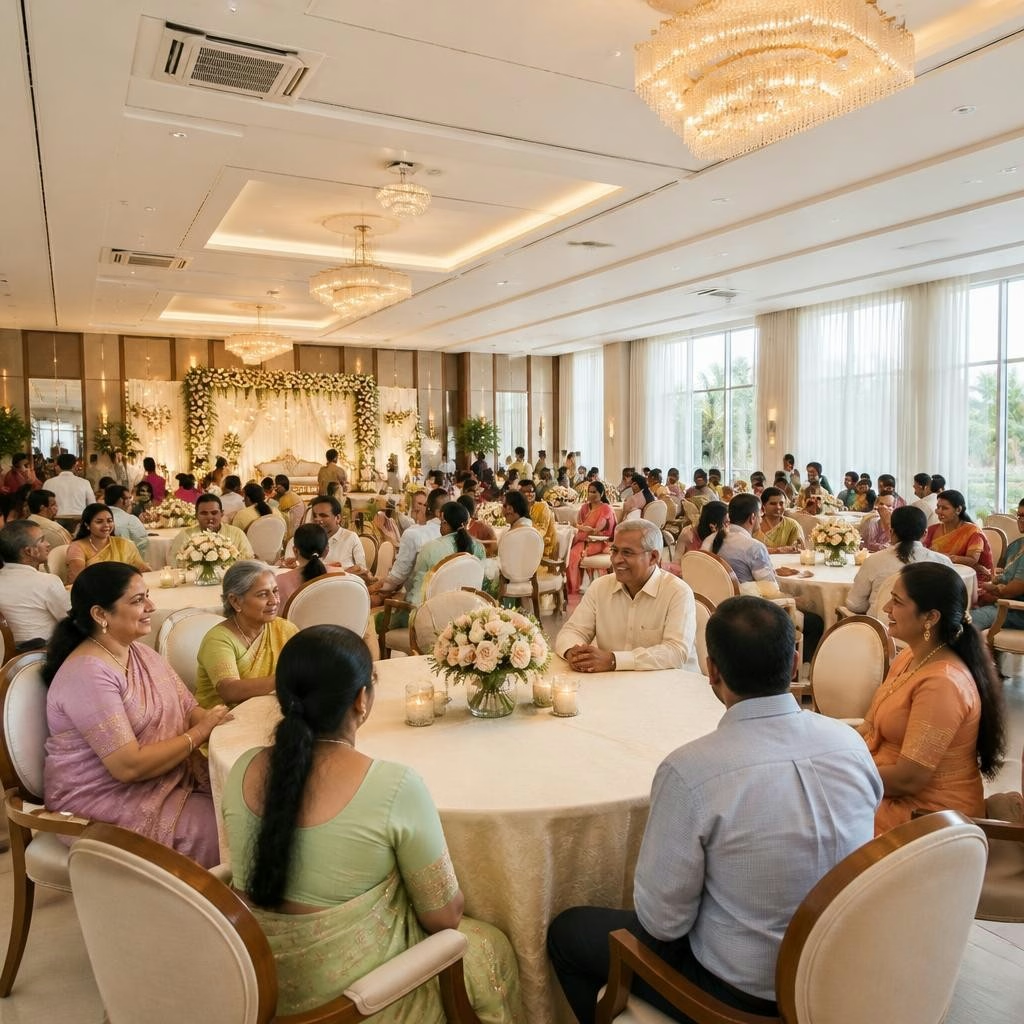
Chennai summers bring high humidity and temperatures that can make outdoor or poorly ventilated events uncomfortable. Choosing a centrally air‑conditioned marriage hall reduces heat stress for guests, protects delicate décor and attire, and helps performers and caterers work efficiently. When evaluating venues, look for consistent cooling across the main hall and dining area, visible maintenance of HVAC systems, and a layout that prevents hot spots near entrances or kitchens. Swarna Sudarshan Wedding Hall in Nanmangalam highlights centralised air conditioning and ground‑floor wedding and dining spaces — features that directly support a more comfortable summer celebration.
Pick the best time of day and shorten outdoor exposure
Scheduling can be one of the most effective ways to reduce heat exposure. Consider late afternoon or early evening ceremonies when sunlight and direct heat are lower. If you need traditional morning rituals, plan them inside the air‑conditioned mandapam or under shaded structures near the entrance. Keep outdoor processions and photo sessions brief, and coordinate with your photographer to use shaded routes around the venue or move portions of the shoot indoors where the AC is reliable.
Use layout and guest flow to avoid crowding and hot spots
A well‑planned flow keeps guests moving through cooled spaces rather than bottlenecking at entrances or service points. Prefer halls where both the wedding and dining areas are on the ground floor — this reduces stair traffic and shortens the distance between cooled zones. Create multiple access points to dining, hand‑wash and restroom areas to prevent queues inside warmer corridors. One reviewer specifically appreciated the ground‑floor arrangement and good air conditioning at the venue, and recommended improving access routes between dining and hand‑wash areas — a reminder to confirm guest circulation plans with your venue manager.
Seating arrangements and ventilation considerations
Arrange seating so air circulates evenly: avoid dense clusters at one end of the hall and keep aisles clear for conditioned airflow. Use lighter fabrics for chair covers and drapes that won’t trap heat; breathable materials help guests stay comfortable. If the venue offers rooms or adjacent garden/play areas, designate them as cooling or family rest areas to spread attendees across spaces. Confirm with the venue that vents and return ducts are unobstructed, and ask about supplemental fans or portable AC units for extremely large gatherings where central systems may be stressed.
Décor and lighting choices that reduce heat
Select décor that complements cooling needs: lighter colors reflect heat, while dense floral installations or heavy fabrics can hold warmth. Use LED lighting instead of halogen to lower heat output near the mandapam and food stations. Place heat‑sensitive décor like fresh flowers or confectionery away from direct airflow or kitchen exits. Work with your decorator to ensure suspended elements do not block air registers or create pockets of still air.
Menu and beverages to keep guests refreshed
Plan a menu with hydration and light options in mind. Offer chilled welcome drinks, plentiful cold beverages, and fruit‑based desserts that feel refreshing in warm weather. If serving hot dishes, keep them at a comfortable distance from guest seating and ensure food stations are under the cover of the AC or shaded areas. Coordinate service timing so food is served promptly to avoid long waiting times under warm buffet lights or crowded lines.
Logistics: parking, restrooms and guest comfort details
Practical logistics affect guest comfort as much as temperature control. Confirm parking availability and valet arrangements to minimise time spent outdoors; several guests praised ample parking at the venue, but some noted that approach roads can be narrow and that parking can feel tight during large events. Verify the cleanliness and accessibility of restrooms, hand‑wash access from the dining area, and availability of rooms for elders or families who may need a quieter, cooler space. Ask the venue about mosquito control in garden or play areas if part of your plan is outdoors.
Final checklist before you book and on event day
Before finalising a venue, inspect the hall during peak daytime heat to test AC performance, check ventilation in all guest areas, and walk common routes to identify potential hot spots. Confirm emergency plans for HVAC issues and request a point of contact for on‑the‑day adjustments. On the event day, have water stations clearly marked, schedule brief outdoor segments, and appoint staff to monitor queues at food and wash areas. With careful planning and communication with the venue management, a centralised AC hall in Chennai can deliver a comfortable, memorable summer wedding for hosts and guests alike.
Customer review


Article by
Swarna Sudarshan Wedding Hall
Finding the right space for your special occasion is essential. Swarna Sudarshan Wedding Hall in Nanmangalam, Chennai, offers versatile spaces for weddings, family celebrations, large gatherings, and corporate conclaves. Our venue accommodates up to 1,700 guests across a 1,500-seat Main Hall, a 750-seat Mini Hall, a 50-seat Conference Hall, and a 120-seat lawn. We provide essential amenities including full air-conditioning, power backup, free Wi-Fi, and ample parking. For guest comfort, we offer 14 well-furnished double rooms for on-site accommodation. Whether hosting a business event or a kalyana mandapam, we ensure a well-maintained setting. Please contact us to book your tour.