How to Plan an Upanayanam in Nanganallur: Hall Layout, Ritual Space, and Guest Comfort
Practical, step-by-step guidance for organizing an Upanayanam in Nanganallur—how to choose a compact community hall, allocate space for homam and the mandapam, manage dining batches, and arrange rooms and logistics for family and guests.
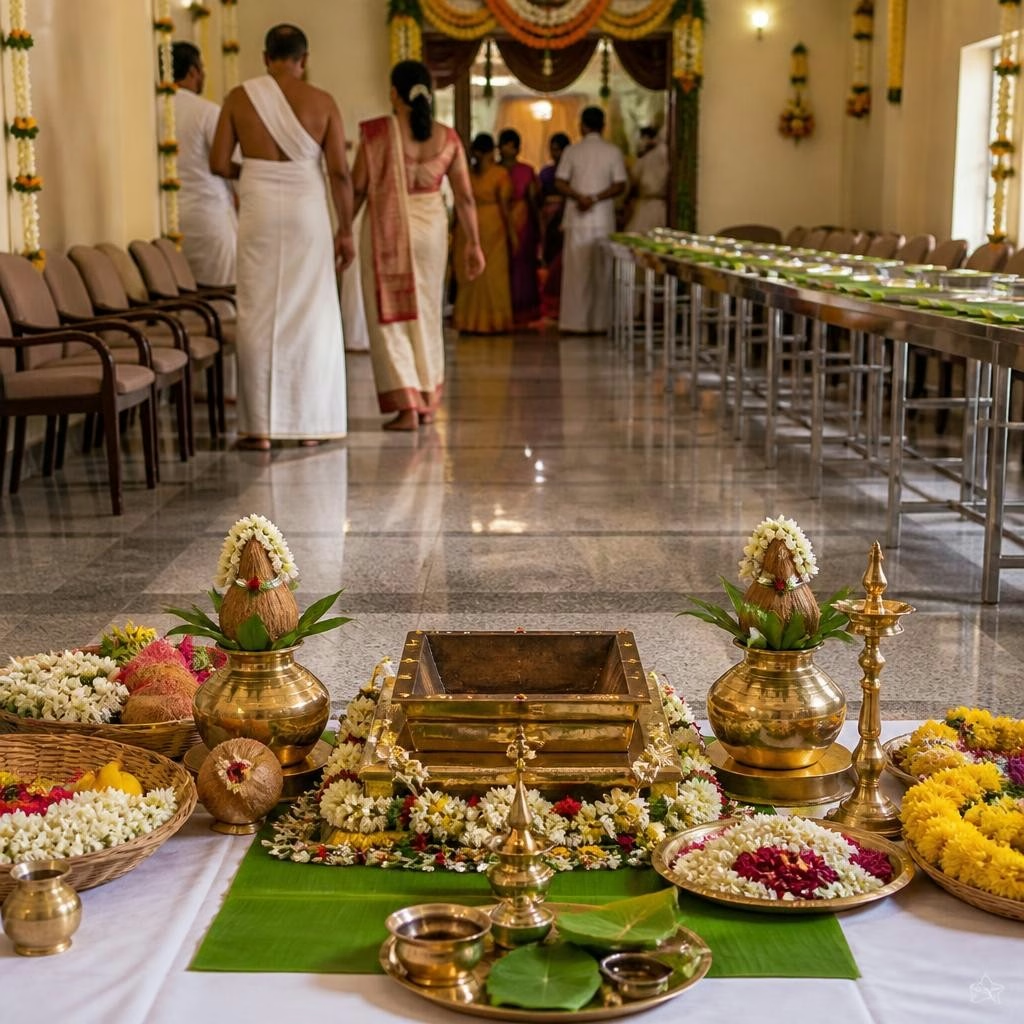
Why a compact community hall can be the right choice
An Upanayanam is an intimate religious ceremony that benefits from a setting that feels both ceremonial and family-friendly. In Nanganallur, many families prefer compact community halls that strike a balance between formality and warmth. Such halls typically seat around 150–225 guests and provide the scale needed for the ritual, a small stage or mandapam, and nearby dining without the formality and cost of a large convention centre. Choosing a hall sized to your confirmed guest list reduces wasted space and helps preserve the ceremonial atmosphere.
Assessing hall layout for the mandapam and homam
When planning the mandapam and homam, prioritize a clear, well-ventilated area with enough clearance for the priest, assistants, and family members. Look for a venue that offers a spacious main hall where you can position the mandapam centrally or slightly forward so guests have an unobstructed view. If the hall is on an upper floor, confirm ease of access for transporting ritual items and firewood to the space. Good lighting and ventilation are essential — reviews of local halls frequently praise clean, well-lit, and well-ventilated function spaces, which makes setting up homam safer and more comfortable for everyone.
Safety and practical setup for homam (fire ritual)
Safety around the homam must be planned in advance. Allocate a fire-safe platform and keep a clear perimeter so guests are not too close to the fire pit. Ensure the hall management permits indoor homam and confirm any additional safety measures they require. Provide a designated entry and exit for the priest and main participants to avoid crowding. If the hall has features such as good ventilation and lighting (noted positively by visitors to local venues), these will help manage smoke and visibility during the ritual.
Managing dining: sessions, flow, and timing
If your chosen venue has a separate dining hall, plan meal batches to avoid crowding. Some local halls provide a dining area that accommodates around 100–120 guests per session; scheduling two or more meal sessions can ensure a smoother service without long queues. Use clear signage and ushers to guide guests between the mandapam and dining area. Coordinate meal timings with the priest and chief guest schedule so serving begins only after the main rituals conclude or at agreed intervals. Confirm what kitchen facilities and utensils the hall provides to avoid last-minute arrangements.
Arranging rooms and accommodation for close family
For family members who need to prepare, rest, or host out‑of‑town guests, confirm on-site room availability. Some community halls in the area offer multiple AC rooms with attached restrooms and basic bedding — a practical convenience for priests, elders, and immediate family. Decide in advance which rooms will be reserved for the priest, parents, and close relatives, and communicate arrival and departure times to the venue manager so rooms are ready when needed. Clean, accessible rooms and lift access are particularly valuable when older relatives attend.
Parking, arrivals and guest accessibility
Plan guest arrivals with realistic expectations about parking and accessibility. Many compact halls in Nanganallur offer adequate two‑wheeler parking and some car parking, but car space can be limited due to main road locations. Consider arranging drop-off points close to the entrance, shared car lifts or staggered arrival times, and signage for pick-up. If valet or external parking services are used, confirm security procedures and supervise vehicle handovers. Ensuring lift access or wheelchairs for elderly guests will make movement between floors comfortable and dignified.
Coordinating with management and staff on the day
Good on-site coordination makes the ceremony run smoothly. Speak with the hall manager ahead of the date to outline the timeline, the homam requirements, dining batches, room allocations and any special requests like additional seating or provision of a changing room. Many customers note that responsive and courteous managers and staff significantly reduce stress on event day; confirm a single point of contact and reconfirm arrival times for vendors, caterers and the priest. Written confirmation of what’s included (timings, room access, parking, and any additional charges) helps avoid misunderstandings.
Final checklist and practical tips before you book
Before finalising a booking, walk the venue with your priest and a trusted family member and check: 1) hall capacity vs. expected guest count; 2) a safe, ventilated spot for the homam and clear guest sightlines; 3) dining capacity and how many meal sessions will be needed; 4) number and condition of guest rooms; 5) lift and accessibility features for elderly attendees; 6) parking arrangements and security for vehicles; and 7) the day‑of contact person and a written list of included facilities and timings. A short rehearsal of the sequence of events (arrival, ritual, blessings, photography, dining) on the morning of the ceremony can save time and keep the focus on the ritual itself.
Customer review


Article by
Sri Hariharan Marriage Hall Nanganallur
Sri Hariharan Marriage Hall is an air-conditioned wedding hall on MGR Road in Nanganallur, Chennai, hosting weddings, receptions, engagements and family functions since 2011. The hall has lift access, covered car parking and valet parking, and is easy to reach from Nanganallur, Madipakkam, Alandur and the airport. Our team helps families plan every detail so the day runs smoothly. Contact us to check available dates or visit the hall.